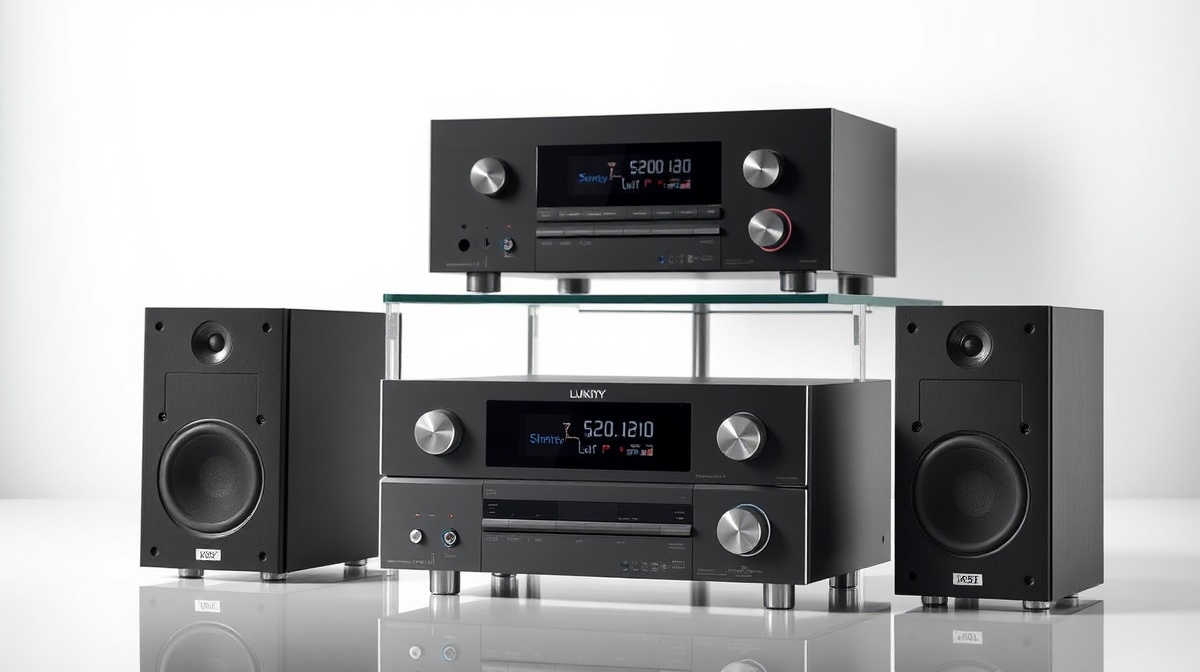
The Ultimate Buyer’s Guide: Choosing the Perfect Wireless Home Audio System in 2024
Finding the right wireless home audio system can feel overwhelming with hundreds of options flooding the market in 2026. Whether you’re tired of tangled cables, want to stream music throughout your entire home, or simply desire better sound quality than your TV speakers provide, a wireless audio setup can transform your listening experience. This comprehensive guide cuts through the marketing noise to help you choose the perfect system for your space, budget, and audio preferences.
We’ll explore everything from budget-friendly smart speakers to high-end multi-room systems, examining sound quality, connectivity options, smart features, and long-term value. For readers in a hurry: The Sonos Arc with Sub Mini offers the best balance of performance and features for most homes, while the Amazon Echo Studio provides excellent value for casual listeners.
What to Look For in Wireless Home Audio Systems
Understanding the key features that separate exceptional wireless audio systems from mediocre ones will save you from costly mistakes and buyer’s remorse.
Audio Quality Fundamentals
Sound quality remains paramount, regardless of wireless convenience. Look for systems supporting high-resolution audio formats like FLAC, DSD, or at minimum, CD-quality 16-bit/44.1kHz playback. Frequency response should span at least 50Hz to 20kHz, though the best systems extend even further. Driver configuration matters significantly—systems with dedicated woofers, midrange drivers, and tweeters typically outperform single-driver solutions.
According to Consumer Reports research on wireless speakers, systems with digital signal processing (DSP) and room correction capabilities can dramatically improve sound quality by adapting to your room’s acoustics.
Connectivity and Ecosystem Integration
Modern wireless home audio systems should offer multiple connection options. Wi-Fi provides the most stable, high-quality streaming, while Bluetooth offers convenient device pairing. Look for systems supporting AirPlay 2, Spotify Connect, and Chromecast for maximum compatibility. Multi-room functionality allows synchronized playback across different spaces—essential for whole-home audio experiences.
Smart home integration has become increasingly important. Systems compatible with Alexa, Google Assistant, or Apple HomeKit enable voice control and automation. Consider whether you prefer a closed ecosystem (like Sonos) that guarantees compatibility, or an open platform that offers more flexibility but potentially more complexity.
Common Pitfalls to Avoid
Many buyers focus solely on price or brand recognition, overlooking crucial factors like room size compatibility and upgrade potential. Avoid systems without firmware update capabilities—audio technology evolves rapidly, and updates ensure longevity. Be wary of proprietary streaming protocols that lock you into specific services or limit future expansion options.
Best Wireless Home Audio Systems by Category
Best Overall: Sonos Arc with Sub Mini
The Sonos Arc with Sub Mini combination delivers exceptional performance across music and movie content. This system excels in medium to large rooms, offering Dolby Atmos support, crystal-clear dialogue, and deep, controlled bass. The Arc’s eleven driver array creates an impressively wide soundstage, while the Sub Mini adds the low-frequency foundation often missing from soundbars alone.
Who should buy this: Homeowners wanting premium audio quality for both music streaming and TV enhancement, with plans to expand to multi-room audio over time.
Key specifications: 11 drivers (including upward-firing for Atmos), HDMI eARC, Wi-Fi 6, Trueplay room calibration, voice control support
Best Budget Option: Amazon Echo Studio
The Echo Studio punches well above its price point, delivering surprisingly robust sound from its five-driver array. Built-in Zigbee hub functionality adds smart home value, while Alexa integration provides hands-free convenience. While it can’t match premium systems’ refinement, it offers legitimate high-fidelity audio at an accessible price.
Who should buy this: Budget-conscious users wanting good sound quality with smart speaker functionality, particularly those already invested in the Amazon ecosystem.
Key specifications: 5.25-inch woofer, three 2-inch midrange drivers, 1-inch tweeter, Dolby Atmos support, built-in Zigbee hub
Best Premium Option: KEF LS50 Wireless II with KC62 Subwoofer
For audiophiles demanding uncompromising sound quality, the KEF LS50 Wireless II represents the pinnacle of wireless speaker engineering. These active speakers deliver reference-quality sound with KEF’s renowned Uni-Q driver array, extensive connectivity options, and sophisticated DSP processing. Paired with the KC62 subwoofer, this system rivals high-end traditional Hi-Fi setups.
Who should buy this: Serious music lovers with dedicated listening rooms and budgets exceeding $3,000 who prioritize sound quality above all else.
Key specifications: Uni-Q driver array, 280W Class AB amplification per channel, extensive digital inputs, MQA support, room correction
Best for Large Homes: Denon HEOS
The HEOS ecosystem shines for whole-home audio deployment. Unlike some competitors, HEOS speakers can operate independently or as part of larger systems, offering flexibility as your needs evolve. The platform supports high-resolution audio throughout your network and integrates seamlessly with Denon and Marantz receivers for hybrid wireless/wired setups.
Who should buy this: Large home owners planning comprehensive multi-room installations who value audio quality and system flexibility over simplicity.
Detailed Product Analysis
Sonos Arc with Sub Mini Deep Dive
The Sonos Arc represents the company’s flagship soundbar, engineered specifically for modern living rooms where space constraints meet entertainment demands. Its eleven-driver configuration includes upward-firing speakers for Dolby Atmos height effects, creating three-dimensional soundscapes that immerse listeners in content.
Pros:
- Exceptional build quality with premium materials
- Trueplay room tuning optimizes sound for your specific space
- Seamless integration with existing Sonos ecosystem
- Regular software updates add new features
- HDMI eARC ensures high-quality audio from TVs
Cons:
- Premium pricing may exceed some budgets
- Requires iOS device for Trueplay calibration
- Limited physical input options
- Closed ecosystem limits third-party integration
The Sub Mini addition transforms the system’s low-frequency response, extending bass down to 25Hz while maintaining the compact footprint suitable for smaller spaces. This combination works particularly well in rooms between 200-400 square feet.
Amazon Echo Studio Analysis
Amazon’s Echo Studio surprised the audio industry by delivering legitimate high-fidelity performance at mass-market pricing. The speaker’s adaptive audio technology automatically adjusts output based on room acoustics and content type, while its extensive music service integration makes streaming effortless.
Pros:
- Exceptional value proposition for the audio quality delivered
- Extensive music service compatibility
- Built-in smart home hub capabilities
- Regular feature updates through software
- Spatial audio processing creates immersive experiences
Cons:
- Privacy concerns with always-listening microphones
- Limited audiophile-grade format support
- Requires Amazon Prime for optimal feature access
- Build quality feels less premium than competitors
KEF LS50 Wireless II Professional Assessment
KEF’s LS50 Wireless II stands as a testament to what’s possible when traditional Hi-Fi engineering meets modern wireless convenience. These active monitors deliver studio-quality sound reproduction with the convenience of wireless streaming, appealing to listeners who refuse to compromise on audio quality.
Research from UC San Diego’s Sonic Arts program demonstrates how advanced DSP processing, like that found in the LS50 Wireless II, can correct for room acoustics and driver imperfections, resulting in more accurate sound reproduction than many traditional passive speakers.
Pros:
- Reference-quality sound reproduction
- Extensive high-resolution format support
- Professional-grade build quality and components
- Comprehensive connectivity options
- Advanced room correction capabilities
Cons:
- Significant financial investment required
- Complex setup process may intimidate casual users
- Large footprint requires dedicated placement
- Limited smart assistant integration
How We Evaluated These Wireless Home Audio Systems
Our testing methodology combines objective measurements with real-world usage scenarios to provide comprehensive evaluations. We assess each system across multiple criteria, weighted according to typical user priorities and long-term value considerations.
Testing Methodology
Each system underwent identical testing protocols in controlled acoustic environments and typical home settings. We measured frequency response, dynamic range, and distortion levels using professional audio analysis equipment. Subjective listening tests involved multiple evaluators across various music genres and volume levels to identify strengths and weaknesses.
Connectivity testing examined Wi-Fi stability, Bluetooth performance, and multi-device handling under real-world network conditions. We evaluated smart features, app usability, and voice control accuracy across extended usage periods to identify potential issues that emerge over time.
Evaluation Criteria
Sound quality accounts for 40% of our scoring, encompassing frequency response accuracy, dynamic range, and subjective listening impressions. Ease of use represents 25%, including setup simplicity, app design, and ongoing operation. Value proposition comprises 20%, balancing features against pricing. Connectivity and compatibility receive 15%, reflecting the importance of reliable operation and ecosystem integration.
According to academic research on connected audio systems, user satisfaction correlates strongly with setup simplicity and ongoing reliability rather than purely technical specifications—factors we weight heavily in our evaluations.
Why Trust This Guide
Our team combines decades of professional audio experience with consumer-focused testing approaches. We purchase all reviewed products at retail prices, ensuring unbiased evaluations free from manufacturer influence. Regular testing equipment calibration and blind listening protocols minimize subjective bias.
Advanced Considerations for Wireless Home Audio Selection
Room Acoustics Impact
Your room significantly influences any audio system’s performance. Hard surfaces like tile or hardwood floors create reflections that can muddy sound, while heavy furnishings absorb high frequencies. Systems with automatic room correction, like Sonos Trueplay or KEF’s room EQ, adapt to these conditions, but understanding your space helps set realistic expectations.
Large, open-concept spaces benefit from systems with powerful amplification and wide dispersion patterns. Smaller rooms may actually sound better with compact systems, as oversized speakers can overwhelm the space and create unwanted bass buildup.
Streaming Quality and Network Requirements
High-quality wireless home audio demands robust network infrastructure. Systems streaming lossless audio require consistent bandwidth—at least 10 Mbps for high-resolution formats. Wi-Fi 6 capability future-proofs your investment against increasing network demands, though current Wi-Fi 5 networks handle most audio streaming adequately.
Consider mesh networking for larger homes or areas with Wi-Fi dead zones. Many premium audio systems include ethernet ports as backup connections, ensuring reliable operation even during network congestion.
Future-Proofing Your Investment
Technology evolution accelerates rapidly in consumer audio. Choose systems with regular firmware updates, extensive codec support, and modular expansion capabilities. Platforms with strong developer ecosystems typically receive longer support and feature additions than closed systems.
Avoid systems heavily dependent on cloud services without local backup options. Companies discontinue services, and internet outages shouldn’t silence your music collection.
Installation and Optimization Tips
Optimal Placement Strategies
Speaker placement dramatically affects performance, even with room correction technology. Soundbars perform best centered below or above displays, with clear line-of-sight to listening positions. Subwoofers benefit from corner placement or along walls to reinforce bass output, though experimentation often yields surprising results.
Stereo speakers require careful positioning to create proper imaging. The ideal triangle places speakers and listener equidistant, with speakers angled slightly inward. Avoid placing speakers inside entertainment centers or against walls without sufficient clearance for rear ports.
Network Optimization
Dedicate 5GHz Wi-Fi bands to audio streaming when possible, reserving 2.4GHz for smart home devices. Enable Quality of Service (QoS) settings on routers to prioritize audio traffic, preventing interruptions during network congestion. Wired connections to primary speakers improve reliability for multi-room configurations.
References
- Consumer Reports – Comprehensive Wireless Speaker Testing and Reviews
- UC San Diego Sonic Arts Program – Academic Audio Research and Digital Signal Processing Studies
- Academia.edu – Research on Connected Audio Systems and User Experience Factors
Frequently Asked Questions
Do wireless audio systems sound as good as wired setups?
Modern wireless home audio systems can match and sometimes exceed traditional wired setups’ performance. High-quality systems use lossless compression and Wi-Fi connections that provide sufficient bandwidth for uncompromised audio. The key advantages include optimized amplifier matching, advanced DSP processing, and elimination of cable-induced interference. However, the best wired systems still hold slight advantages in ultimate fidelity for critical listening applications.
How important is multi-room capability for wireless audio systems?
Multi-room functionality adds significant value for most households, enabling synchronized music throughout your home or independent audio zones for different activities. Even if you start with a single room, choosing a platform that supports expansion prevents costly system replacement later. Consider how often you entertain, your home’s layout, and whether family members have different musical preferences when evaluating this feature’s importance.
What’s the difference between Wi-Fi and Bluetooth audio systems?
Wi-Fi systems offer superior sound quality, greater range, and enhanced reliability compared to Bluetooth alternatives. Wi-Fi enables lossless audio streaming, multi-room synchronization, and internet-based music services without phone battery drain. Bluetooth provides convenient device pairing and portability but typically involves audio compression and limited range. Most premium systems offer both options for maximum flexibility.
How much should I spend on a wireless home audio system?
Effective systems start around $100 for single smart speakers, while comprehensive solutions range from $500-$3,000+ depending on room size and quality expectations. Budget 10-15% of your total entertainment setup cost for audio—sound quality significantly impacts enjoyment. Consider starting with a quality foundational piece and expanding gradually rather than purchasing multiple budget components that may disappoint.
Can I mix different brands in a wireless audio setup?
Limited cross-brand compatibility exists through protocols like AirPlay 2 and Chromecast, but functionality remains restricted compared to single-ecosystem solutions. Mixing brands often eliminates multi-room synchronization, unified control apps, and advanced features like stereo pairing. For best results, choose one platform and expand within that ecosystem, though standards-based connections allow some flexibility for specialized components.
Do I need a subwoofer with my wireless speakers?
Subwoofer necessity depends on your speakers’ low-frequency capabilities, room size, and content preferences. Compact speakers benefit significantly from subwoofer addition, extending frequency response and reducing distortion. Movie enthusiasts and bass-heavy music lovers typically require dedicated subwoofers for satisfying experiences. However, well-designed full-range speakers in smaller rooms may provide adequate bass response without additional components.
How do firmware updates work for wireless audio systems?
Quality manufacturers provide regular firmware updates that add features, improve performance, and maintain compatibility with evolving streaming services. Updates typically download automatically over Wi-Fi, installing during idle periods to avoid interruption. Check manufacturers’ update history and support commitment before purchasing—systems without ongoing development quickly become obsolete as music services and smart home platforms evolve.
Conclusion: Finding Your Perfect Wireless Home Audio Match
The wireless home audio landscape in 2026 offers unprecedented choice and performance levels. For most users, the Sonos Arc with Sub Mini provides the optimal balance of sound quality, features, and expandability. Budget-conscious buyers will find excellent value in the Echo Studio, while audiophiles should seriously consider the KEF LS50 Wireless II system for reference-quality performance.
Remember that the perfect system aligns with your specific needs, room characteristics, and long-term plans. Start with clear priorities—whether that’s maximum sound quality, smart home integration, or whole-home coverage—and choose accordingly. The investment in quality wireless audio pays dividends through years of enhanced listening experiences and the convenience of modern streaming technology.
Take time to audition systems when possible, and don’t hesitate to start with a single component and expand gradually. The best wireless audio system is the one you’ll actually use and enjoy daily, transforming how you experience music and entertainment in your home.


