Introduction
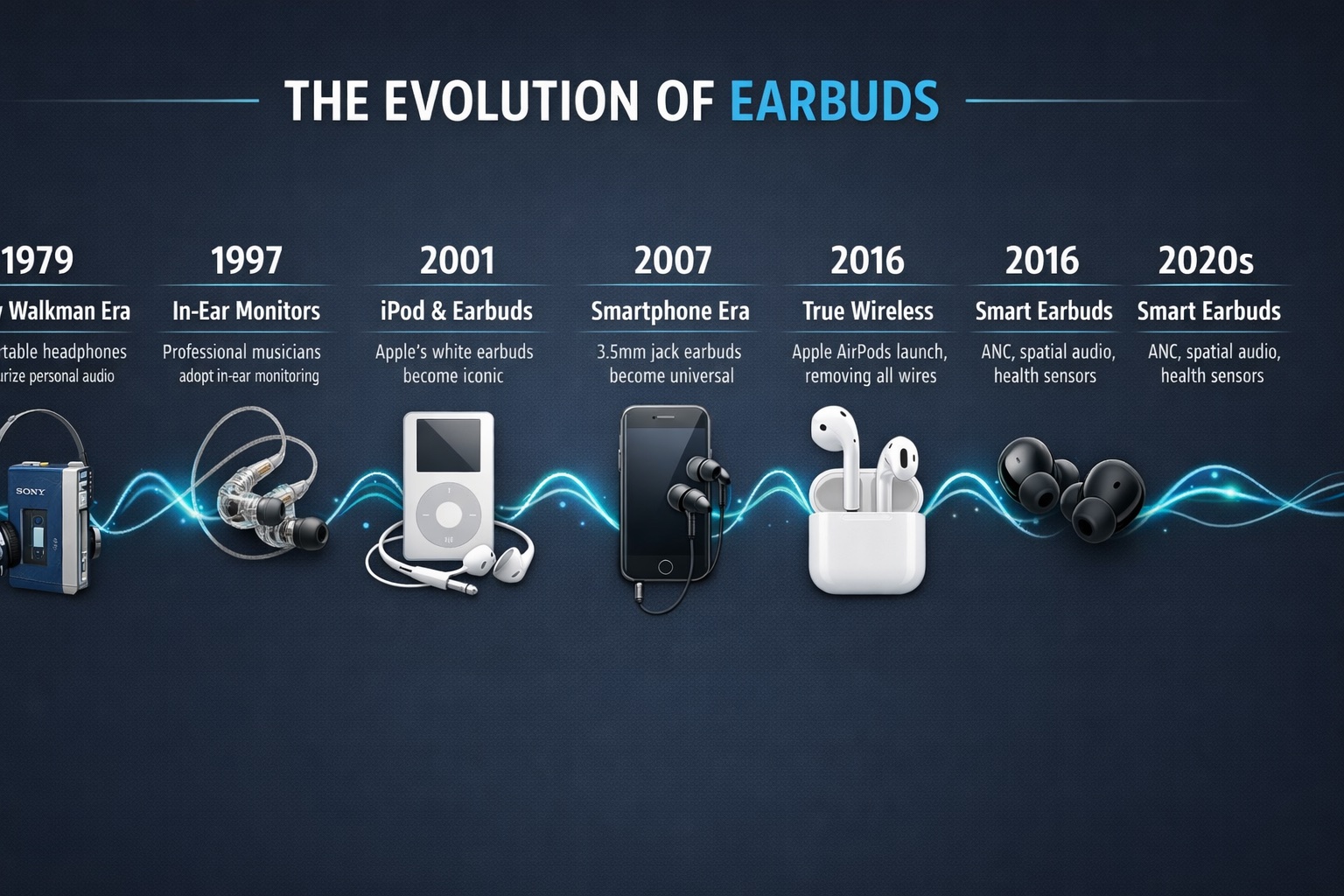
The world of personal audio has undergone a revolutionary transformation in 2026, with earbuds evolving from simple sound transducers into sophisticated wearable computers capable of monitoring brain activity, delivering immersive spatial audio, and adapting to your unique hearing profile in real-time. This evolution represents the convergence of advanced acoustics, artificial intelligence, and biomedical sensing technologies.
Whether you’re an audiophile seeking pristine sound reproduction, a fitness enthusiast wanting comprehensive biometric tracking, or a professional requiring seamless connectivity across multiple devices, understanding these next-generation technologies is crucial for making informed purchasing decisions. The stakes have never been higher – with premium models now exceeding $500, choosing the wrong earbuds can mean missing out on features that fundamentally change how you interact with audio content.
This comprehensive guide will demystify the complex technologies powering today’s earbuds, helping you navigate through marketing hype to understand what truly matters for your specific needs and budget.
What Are Next-Generation Earbuds?
Next-generation earbuds are intelligent audio devices that combine traditional sound reproduction with advanced computational capabilities, biometric sensing, and adaptive signal processing. Unlike conventional earbuds that simply play audio, these devices function as miniaturized wearable computers that can monitor physiological signals, process environmental audio cues, and deliver personalized listening experiences.
At their core, these earbuds work by integrating multiple sensing technologies – including accelerometers, gyroscopes, heart rate monitors, and even electroencephalography (EEG) sensors – with powerful digital signal processors and machine learning algorithms. Research from UC Berkeley has demonstrated that earbuds can now read brain activity through EEG sensors positioned in the ear canal, opening possibilities for hands-free device control and cognitive load monitoring.
Think of them as the smartphone equivalent in the audio world – just as phones evolved from simple communication devices into powerful computers, earbuds have transformed from basic audio players into comprehensive personal assistance platforms that understand both your environment and your physiological state.
How Next-Generation Earbuds Work
The technical architecture of modern earbuds involves several sophisticated subsystems working in harmony. The acoustic engine combines traditional dynamic or balanced armature drivers with computational audio processing, allowing for real-time sound signature adjustments based on hearing tests, environmental conditions, and personal preferences.
The sensor array represents perhaps the most significant advancement. Modern earbuds incorporate multiple MEMS (Micro-Electro-Mechanical Systems) sensors including three-axis accelerometers for motion tracking, optical heart rate sensors using photoplethysmography (PPG), and increasingly, flexible printed sensors that can detect bioelectric signals. According to research from UC San Diego, these screen-printed flexible sensors enable earbuds to simultaneously record brain activity and exercise levels with medical-grade accuracy.
The computational layer utilizes dedicated audio processing chips, often incorporating neural processing units (NPUs) for real-time machine learning tasks. These processors handle everything from active noise cancellation algorithms that adapt to your ear canal geometry, to predictive audio caching that pre-loads content based on your listening patterns.
Connectivity has evolved beyond simple Bluetooth, with many models now supporting mesh networking capabilities, allowing multiple earbuds to share processing power and create coordinated audio experiences across multiple users.
Why Next-Generation Technology Matters
The impact on audio quality and user experience is profound. Traditional earbuds deliver the same audio signal to every user, regardless of individual hearing characteristics or environmental conditions. Next-generation earbuds create a personalized audio profile by conducting in-ear audiometry tests and continuously adapting output to compensate for hearing variations across frequencies.
This technology makes the most significant difference in three scenarios: noisy environments where adaptive noise cancellation can improve intelligibility by up to 40%, extended listening sessions where fatigue compensation algorithms reduce ear strain, and fitness applications where integrated biometric monitoring eliminates the need for separate devices.
However, these advanced features don’t always matter. For casual listening in quiet environments with high-quality source material, the benefits may be marginal compared to well-tuned traditional earbuds. The computational processing can also introduce slight latency, making some next-gen features less suitable for professional audio monitoring or gaming where timing precision is critical.
Common Myths and Misconceptions
Myth: “More sensors always mean better performance.” Reality: Sensor quality and algorithm sophistication matter more than quantity. A single well-calibrated sensor with advanced processing often outperforms multiple poorly integrated sensors.
Myth: “AI-powered audio automatically sounds better.” Reality: Machine learning algorithms require extensive training data and proper implementation. Many “AI-enhanced” features are actually simple DSP algorithms rebranded for marketing purposes.
Myth: “Biometric accuracy in earbuds matches dedicated medical devices.” Reality: While impressive, earbud sensors face placement constraints and movement artifacts that can affect accuracy. Research from University at Buffalo shows that while earbuds can provide valuable health insights, they should complement rather than replace dedicated medical monitoring devices.
Myth: “Battery life suffers significantly with advanced features.” Reality: Modern power management and efficient processors actually allow many next-gen features to run with minimal battery impact when properly optimized.
Practical Applications and Buying Guide
When evaluating next-generation earbuds, focus on these key technical specifications and features:
Audio Processing: Look for earbuds with dedicated audio DSP chips (Digital Signal Processors) rather than relying solely on smartphone processing. Specifications should include bit depth and sampling rate capabilities – aim for at least 24-bit/96kHz support for high-resolution audio.
Sensor Integration: Evaluate which sensors align with your needs. Heart rate monitoring requires PPG sensors, while head tracking for spatial audio needs IMU (Inertial Measurement Unit) sensors. Don’t pay for sensors you won’t use.
Personalization Capabilities: Test the hearing assessment feature if available. The best systems conduct comprehensive audiometry tests and create detailed hearing profiles with frequency-specific adjustments.
Computational Features: Real-time processing features like conversation enhancement, wind noise reduction, and adaptive EQ provide more practical value than passive filtering. Look for earbuds that can demonstrate these features during audition.
Testing Protocol: When evaluating earbuds, conduct A/B comparisons using familiar reference tracks across different genres. Test noise cancellation in actual noisy environments, not just quiet showrooms. Verify that biometric sensors provide consistent readings by comparing with known accurate devices.
Frequently Asked Questions
Q: How accurate are the biometric sensors in modern earbuds compared to dedicated fitness trackers?
A: Earbud heart rate sensors can achieve 95%+ accuracy during steady-state activities due to excellent blood flow in ear tissue. However, they may be less accurate than chest straps during high-intensity interval training due to movement artifacts. The ear canal provides a stable environment for many physiological measurements, often outperforming wrist-based devices.
Q: Do computational audio features introduce noticeable latency for video watching or gaming?
A: Most next-generation earbuds introduce 20-40ms of additional latency for real-time processing features. While this is imperceptible for music, it can cause lip-sync issues with video. Look for models with dedicated low-latency gaming modes that disable certain processing features to reduce delay to under 60ms total.
Q: How do machine learning algorithms improve over time, and do they require internet connectivity?
A: Most earbuds use on-device machine learning for real-time features like noise cancellation adaptation, requiring no internet connection. However, more sophisticated personalization algorithms may upload anonymized usage data to improve their models. Check privacy settings to control this data sharing.
Q: Can next-generation earbuds replace multiple devices like fitness trackers and sleep monitors?
A: For many users, yes. High-end earbuds now offer comprehensive activity tracking, sleep stage monitoring, and even stress level assessment. However, battery life constraints mean they can’t provide 24/7 monitoring like dedicated wearables. They excel as workout companions and short-term health monitors.
Q: What’s the real-world battery life impact of enabling all advanced features simultaneously?
A: Enabling all features typically reduces battery life by 20-30% compared to basic audio playback. The most power-hungry features are active noise cancellation, continuous biometric monitoring, and real-time spatial audio processing. Most users find the 4-6 hour reality with all features enabled sufficient for daily use with case charging.
Q: How do these earbuds handle wind noise and environmental challenges during outdoor activities?
A: Advanced earbuds use multiple microphones and predictive algorithms to identify and suppress wind noise before it affects audio quality. Some models include dedicated wind-resistant modes that adjust microphone sensitivity patterns and processing algorithms specifically for outdoor activities.
Q: Are the health monitoring features FDA-approved or medically validated?
A: Most consumer earbud health features are not FDA-approved medical devices and should not be used for medical diagnosis. However, many undergo validation studies comparing their accuracy to medical-grade equipment. Always consult healthcare providers for medical concerns, using earbud data as supplementary wellness information.
Conclusion
Next-generation earbuds represent a paradigm shift in personal audio, offering unprecedented integration of sound quality, health monitoring, and intelligent adaptation. The key takeaways for 2026 buyers include prioritizing sensor quality over quantity, understanding that computational features work best when properly implemented rather than simply marketed, and recognizing that these devices serve different needs than traditional high-fidelity earbuds.
Care about these advanced features when you want seamless integration between audio entertainment and health monitoring, frequently listen in challenging acoustic environments, or value personalized audio experiences that adapt to your unique hearing profile and preferences.
For deeper technical understanding, explore the research from institutions like UC Berkeley, UC San Diego, and University at Buffalo, which continue pushing the boundaries of what’s possible in earable computing. The field evolves rapidly, making it essential to focus on fundamental capabilities and proven technologies rather than bleeding-edge features that may not deliver practical benefits.